English ECED
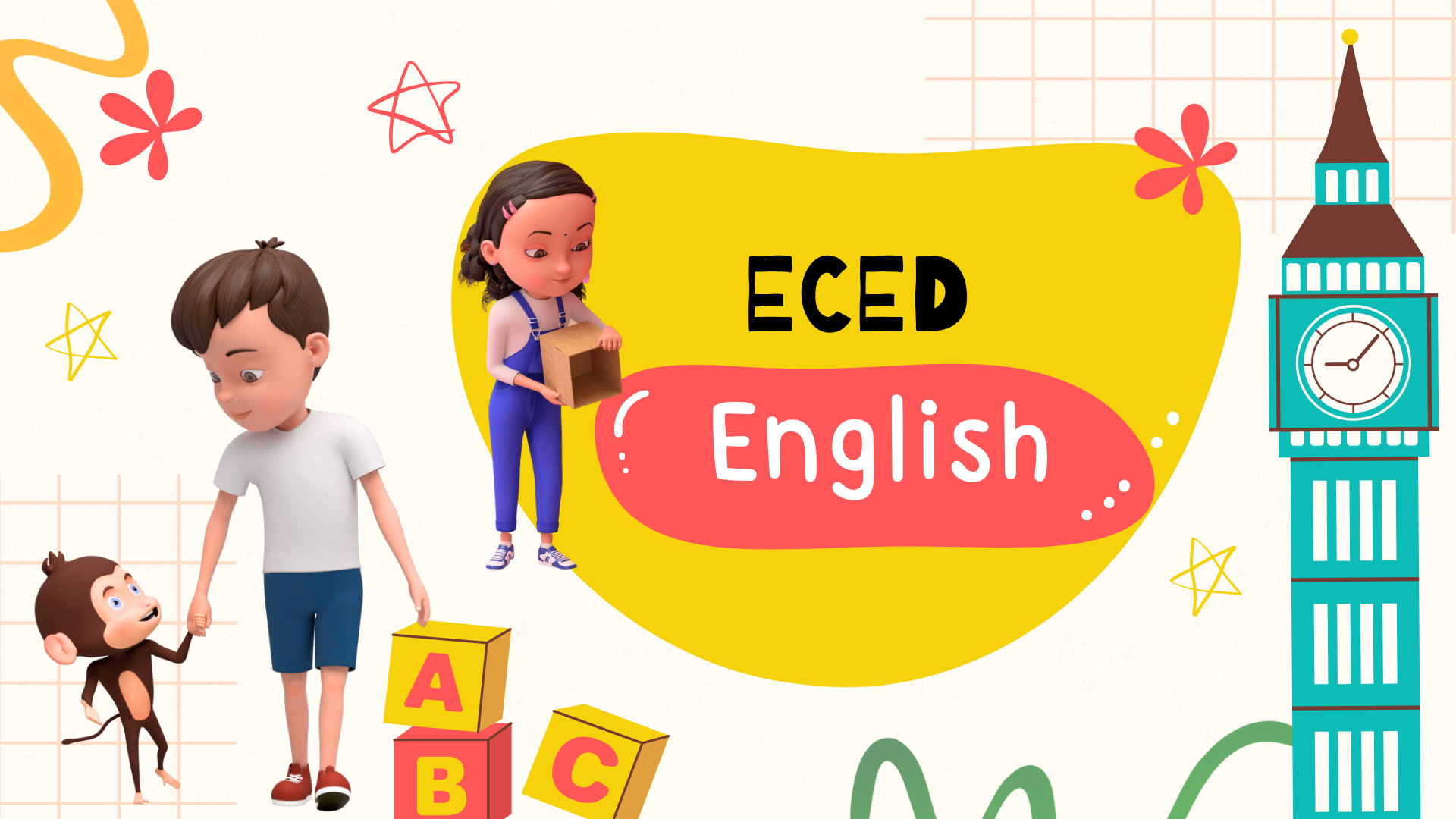
ECED English — Course Description Course overview This Early Childhood Education & Development (ECED) English course is designed for children aged 3–5 years. The course builds foundati...
77 Video LessonsEnglish🕐 32 hrs
Video Preview
Course Syllabus
1
Me and My Family
2
Alphabet
3
My Daily Life
4
My School
5
My Belongings
6
Our Culture
Course Description
ECED English — Course Description
Course overview
This Early Childhood Education & Development (ECED) English course is designed for children aged 3–5 years. The course builds foundational language, communication, and early literacy skills through playful, activity-based lessons. It covers greetings and daily expressions, alphabet familiarity (A–Z), body parts and senses, routines, classroom vocabulary, family and home topics, colors, simple sentences, emotions, festivals, and revision sessions to reinforce learning.
Who is this for?
- Children aged 3–5 years (pre-primary / playgroup / nursery)
- ECED teachers and caregivers seeking structured lesson plans
- Parents who want guided activities to support language development at home
Learning goals
- Recognize and say common greetings and time-of-day phrases (Hello, Namaste, Good morning/night).
- Develop phonemic awareness and familiarity with the English alphabet A–Z through repeated, multi-sensory practice.
- Name basic classroom items, family members, rooms of the house, and common body parts and senses.
- Build simple sentence fluency: "My name is…", "My school’s name is…", "May I…?"
- Identify colors, days of the week, routines, emotions and practice good habits.
- Use songs, games and hands-on activities to reinforce vocabulary and concepts.
Structure & key topics (high level)
- Introductions & Greetings: Hello, Namaste, Good morning/afternoon/night, Time of the day
- Family & Home: My family, Rooms of the house, Bed/Bag/Books
- Alphabet: A — Z with repeated practice across lessons
- Body & Health: Sense organs, body parts, brush your teeth, good habits
- Routines & Classroom: Morning/Afternoon/Evening routines, My classroom, Going to school
- Language Use: Making simple sentences, "May I?", Magic words, "You say, I do"
- Creative & Motor: Lines (straight/curved), colors (primary & secondary), origami
- Play & Games: Indoor/outdoor games, simple role-play
- Festivals & Culture: Dashain, Tihar, Lhosar (introduce cultural vocabulary)
- Revision: Regular revision lessons to consolidate learning
Benefits for children
- Stronger listening and speaking skills through repetition and song.
- Early alphabet awareness and readiness for reading.
- Improved social language: greetings, polite requests, classroom interaction.
- Confidence in using short sentences and expressing basic needs/emotions.
- Better fine motor skills via drawing, origami and tracing lines.
Teacher / Caregiver guidance (quick tips)
- Keep sessions short (10–20 minutes) with frequent movement breaks.
- Use songs, puppets and picture cards for each alphabet and topic.
- Model simple sentences and invite children to repeat in chorus then one-by-one.
- Pair vocabulary with actions (touch nose for "nose", point to "classroom").
- Use daily routines (morning circle, snack time) to practice "May I?" and polite phrases.
- Involve parents: send home 1–2 simple activities after each topic (draw, name family members).
- Assess informally by observing ability to name 5–10 words from each topic and to say simple sentences.
Review
No Reviews Yet
Popular Courses
View All