ECED Art and Crafts
ECED Art & Craft — Course Description Course overview This Art & Craft course for early learners (ages 3–5 years) introduces children to basic creative skills: coloring, drawing, form ...
23 Video LessonsEnglish
Video Preview
Course Syllabus
1
Level - 1 Crafts
2
Level 2 - Crafts
Course Description
ECED Art & Craft — Course Description
Course overview
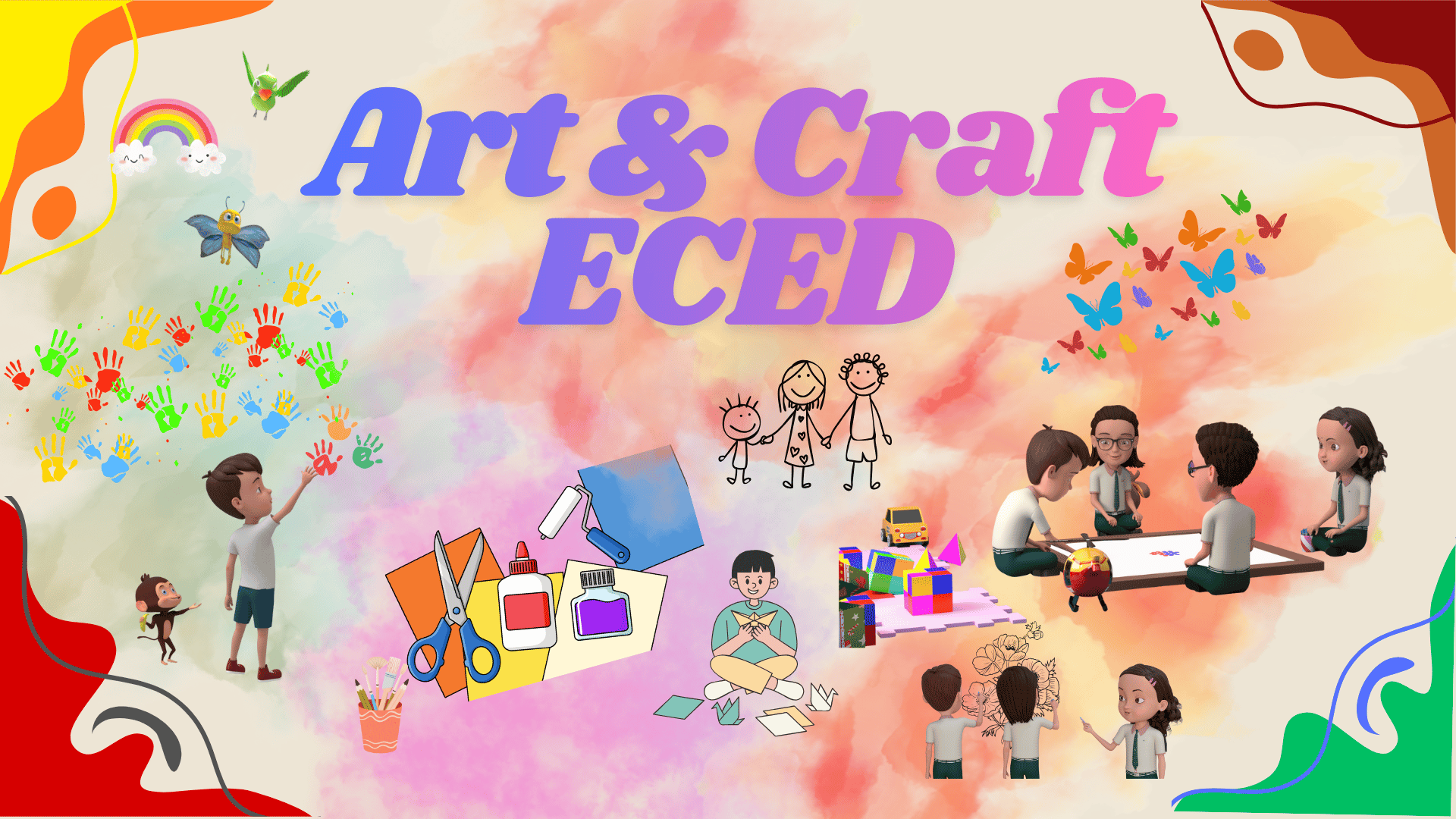
This Art & Craft course for early learners (ages 3–5 years) introduces children to basic creative skills: coloring, drawing, form arts, paper cutting, simple collage, folding, and texture play. Learning is hands-on, sensory, and play-centred to build fine motor control, creativity, and self-expression.
Key activities
- Coloring with crayons, wax, and water-based markers.
- Drawing simple lines, shapes, people, houses and animals.
- Form arts (making shapes from clay/playdough, finger-painting).
- Paper cutting & tearing safe snips and creative tearing for texture.
- Collage & pasting using colored paper, fabric scraps, and natural materials.
- Folding & simple origami — boats, hats, fans.
Materials (simple & safe)
- Thick paper/cardstock, child-safe scissors, non-toxic glue
- Crayons, washable markers, finger paints
- Playdough or soft clay, brushes, sponges
- Scrap fabric, colored paper, yarn, leaves, feathers (optional)
Learning goals
- Develop fine motor skills (holding crayons, cutting, folding).
- Recognize colors, shapes, sizes and basic spatial concepts.
- Encourage imaginative thinking and confident self-expression.
- Follow simple instructions and practise sharing & cleanup routines.
- Introduce patterning, sequencing and cause-effect through materials.
Benefits for children
- Stronger pencil grip and hand coordination for early writing readiness.
- Improved concentration and patience through step-by-step activities.
- Emotional expression — art as a way to communicate feelings.
- Boosts confidence when children complete and display their work.
Teacher / Caregiver tips
- Keep instructions simple and demonstrate one step at a time.
- Encourage experimentation — there’s no single “right” result.
- Use routines: set-up, create, show & praise, tidy-up.
- Adapt tasks: offer pre-drawn shapes for children who need help.
- Celebrate process over product: ask "How did you make this?" rather than "Is it perfect?"
- Ensure safety: supervise scissors and small objects; choose non-toxic materials.
Review
No Reviews Yet
Popular Courses
View All